
After a season of anticipation, we finally delved into the world of computer science with Smart Start Beginning Coding by Evan-Moor. This curriculum is a vibrant, full-color introduction to the logic of programming—a significant aesthetic "win" in our classroom, as the visual appeal truly fuels my daughter’s enthusiasm. At the rear of the volume, I discovered a perforated two-page summary of the core concepts, which I promptly extracted and stapled into a "coding handbook." This served as our intellectual roadmap, allowing us to define our terminology before we ever touched a worksheet. My daughter was so captivated by these definitions that by the time we reached the final page, she was already campaigning for a real-world coding project.
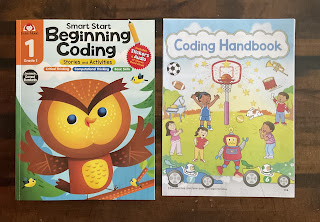

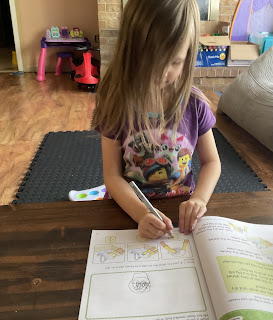
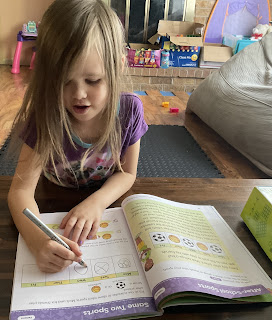
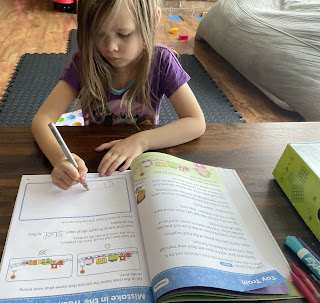

The curriculum is thoughtfully divided into foundational pillars: algorithms, sequencing, decomposition, patterns, debugging, loops, and conditionals. Each section is punctuated with interactive "cut-and-paste" activities, which I find indispensable for maintaining engagement in the primary years. We began with algorithms—the art of ordering tasks—which she navigated with complete autonomy. However, it was the section on decomposition that sparked the most delightful "aha!" moment. When I asked if she understood the concept of breaking large problems into manageable pieces, she immediately drew a parallel to her household chores: "It’s like when my room is a disaster, and you have me pick up just the blocks, then just the books, until the whole mess is gone!"

While sequencing and patterns were essentially a celebratory review of skills she had already mastered, debugging introduced an entirely new vocabulary. To bring this to life, I provided a live demonstration using my blog’s architecture. I intentionally sabotaged the code for my "jump links" to show her how a single error can halt a program's function. We then "hunted the bug" together, corrected the syntax, and celebrated when the links functioned perfectly. While the book explains "bugs" with remarkable clarity, seeing the cause-and-effect in a real-world application was the catalyst that turned a lesson into a passion.

We concluded with loops (repetitive actions) and conditionals, which she grasped instantly through a series of "if/then" scenarios regarding her daily life—such as, "If the dog needs to go outside, then we must open the door." While the publisher marks this for the first grade, I believe a cognitively advanced kindergartener (ages 4–5) could navigate this material with ease. It is an exceptional "bridge" curriculum that demystifies the digital world through tactile, analog play.

I wholeheartedly recommend Smart Start Beginning Coding for any family looking to modernize their morning basket or supplemental rotation. It has certainly inspired me to hunt for more advanced coding resources to keep up with my daughter's burgeoning interest. With the new academic season just around the corner, this is a "must-buy" for your homeschool or after-school enrichment. I am curious to hear from my fellow tech-savvy parents: do you have a favorite app or physical resource that takes these concepts from the page to the screen? Let us know in the comments below!

Comments
Post a Comment