Review: 180 Days of Social Studies Kindergarten

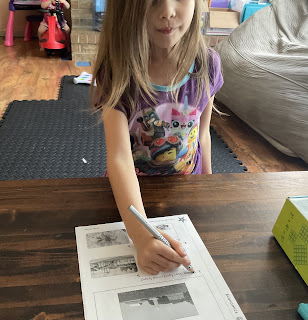
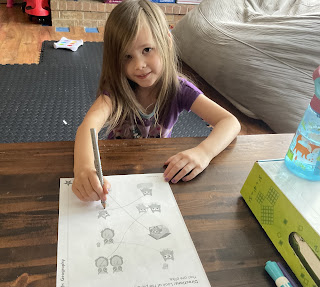
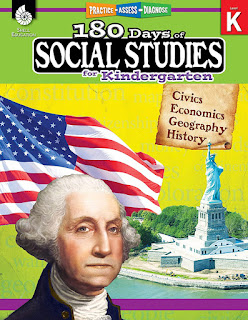
While Story of the World has been the reliable backbone of our historical narrative, I recently sensed a distinct "civics-shaped" void in our social studies rotation. In my quest to bridge this gap, I discovered 180 Days of Social Studies. Although my daughter is currently at the first-grade level, I made the executive decision to begin with the Kindergarten volume to ensure no foundational stones were left unturned. This curriculum is unapologetically US-centric, focusing heavily on American holidays and domestic historical milestones—a perfect fit for our household, though international families may find it less applicable to their regional needs. My only aesthetic grievance? The interior is strictly monochromatic. I do find myself wishing for a splash of color to help the lessons truly "leap" off the page.
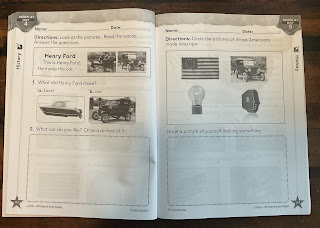
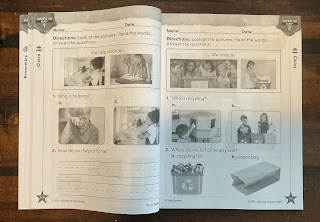
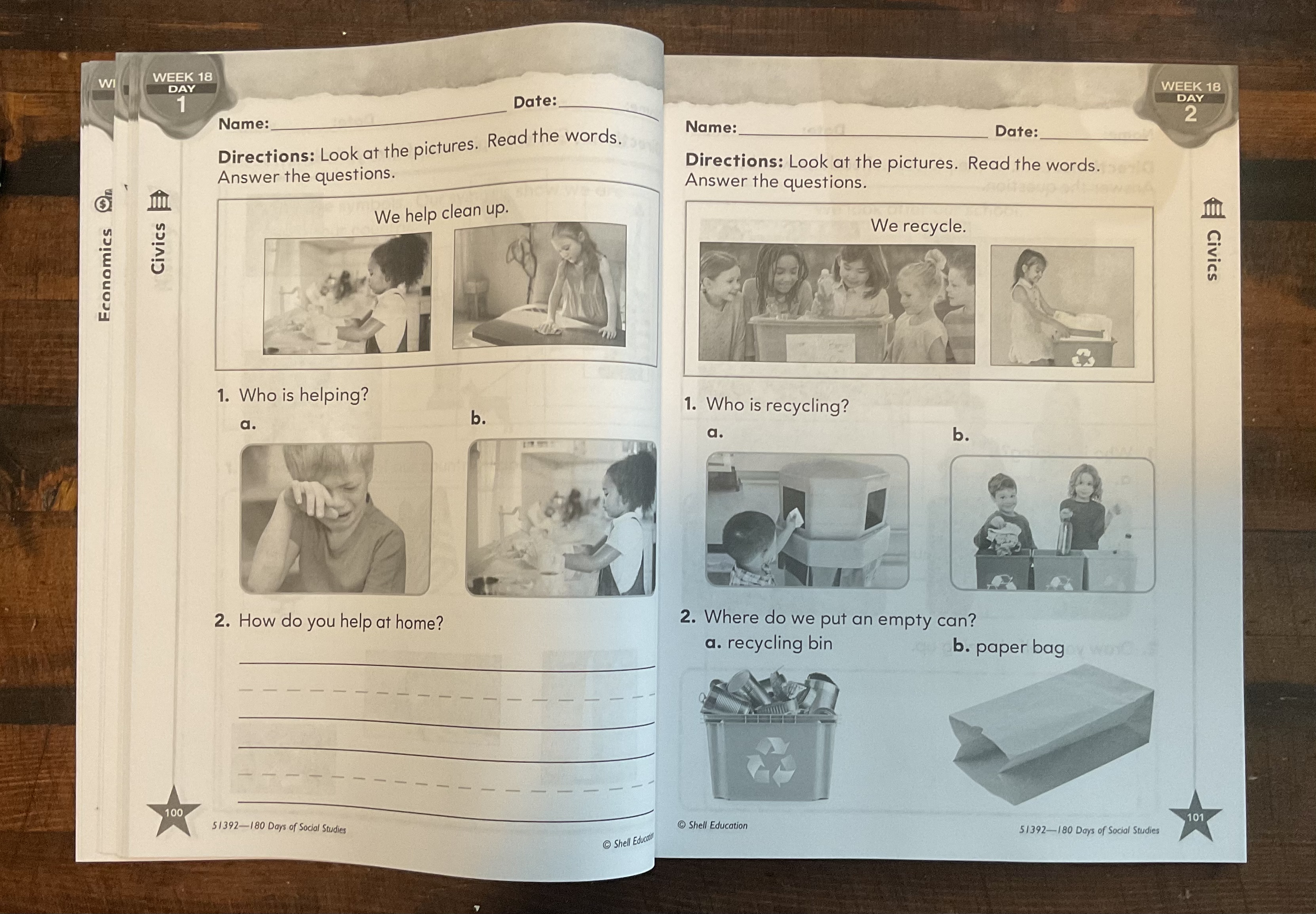
We have navigated seven weeks of the program thus far, and due to its accessible nature, we’ve abandoned the "one page a day" mandate in favor of a more accelerated pace. The curriculum is elegantly structured into five-day thematic cycles, covering the four pillars of social studies: history, geography, civics, and economics. It traverses everything from personal behavior to the vital roles of community helpers with impressive breadth. For the student who is still developing their "pen-to-paper" confidence, this volume is an absolute sanctuary; it prioritizes circling answers and drawing illustrations over rigorous writing, making it a stress-free introduction to the subject.


Prior to this, we utilized Skill Sharpeners Geography, which boasts a vibrant, full-color layout and engaging end-of-lesson activities. However, the sheer comprehensive scope of 180 Days has won us over. While I intend to keep both in our repertoire for the next few grade levels, 180 Days has officially taken the lead. Since we are a year-round homeschooling family with a slightly extended academic calendar, we will likely glide into the first-grade book before the traditional school year concludes, though I plan to preserve the second-grade volume as a "grand opening" for her sophomore year.

There are numerous other "180 Days" subjects available, but given that our current curriculum is humming along with near-perfection, I’ll be sticking strictly to the Social Studies track for now. It is a superlative supplement that ensures your child isn't just learning about the ancient past, but also the mechanics of the world they inhabit today. I am curious to hear from those who have ventured further into the 180 Days ecosystem: do you find these workbooks stand on their own, or do they always require a "partner" curriculum like Story of the World? Let me know your thoughts in the comments!


Comments

Popular posts from this blog

Review: All About Reading Level 4

We have officially reached the summit of  All About Reading Level 4 , and I am currently accepting trophies, high-fives, and perhaps a very large latte. If you had told me a few years ago that we’d be tackling "anomalous phonetic structures" and "loanwords" without a total household meltdown, I would have assumed you were hallucinating. Yet, here we are, and I am officially a fan-girl for All About Learning Press. This final level is essentially the "Black Belt" of literacy instruction, diving into the deep end of the linguistic pool with a level of clarity that is frankly miraculous. The curriculum tackles those treacherous "borrowed" words that usually make the English language look like it was put together in a blender. As a dyslexic educator teaching a fellow dyslexic, I’ll be entirely transparent: I encountered phonetic principles in these four levels that were completely absent from my own public school experience. I was basically learning ...

Review: Djeco Pompom Pictures - All Aboard

Djeco Pompom  is a super cute and easy art craft for toddlers. They just put the pompoms on the corresponding dots. I like that it comes with all the pompoms you need. However, the glue stick they give you doesn’t make the pompoms sticks to the board. I tried regular glue and that didn’t work either so I ended up having to use a hot glue gun. So, I suggest having hot glue if you get this. There are small circles on the boards to let you know what color pompom goes where so it’s pretty self-explanatory. The kit does come with a small manual that it done with pictures so even your little one can look at the manual and understand which pompoms go on which board. 

Review: A to Z Board Book

In our household, literature is the cornerstone of early education, so we began our daily reading rituals when our daughters were mere infants. While our shelves are currently burgeoning with an eclectic array of alphabet primers, the  A to Z Board Book  has secured a particularly prestigious position in our rotation. As the name suggests, this is a board book—a vital feature for anyone navigating the "destructive" phase of toddlerhood. My youngest has a penchant for paper shredding that would rival a high-end office machine, so the sturdy construction of a board book is a non-negotiable necessity. However, because this is a "lift-the-flap" volume, I maintain a strict "supervised access only" policy to ensure the flaps remain attached to their respective pages. We have integrated this book into our daily school routine, as it offers a multifaceted sensory experience. My daughter is currently enchanted by the interactive elements, relishing the opportunity ...