Review: Sensory Tissue Box

In our ongoing quest to navigate the "curiosity phase" of toddlerhood, we’ve recently integrated a Sensory Tissue Box into our rotation—a luxury we didn't have during our first daughter's infancy. Let’s be candid: babies possess an almost magnetic attraction to things they shouldn't touch, and the household tissue box is often their primary target. We once attempted to let her explore a standard box of Kleenex, which resulted in a catastrophic blizzard of 250 shredded tissues and a decimated cardboard container. This sensory alternative, however, is a masterclass in durable design. Constructed from plush, high-quality fabric, it is essentially impervious to the "shredding" instincts of a determined toddler, and with only fifteen "tissues" to manage, the cleanup is infinitely more civilized.
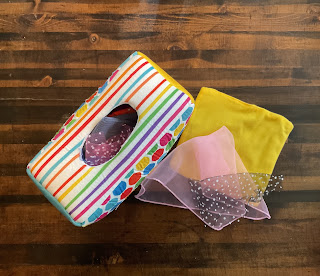
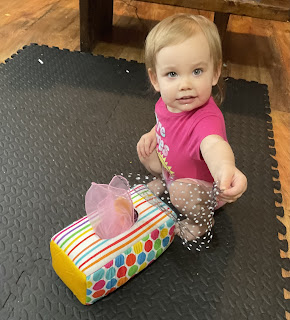
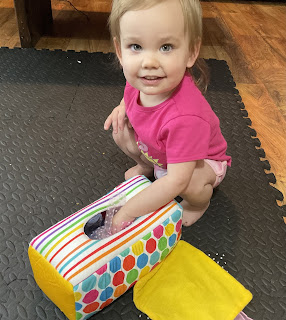
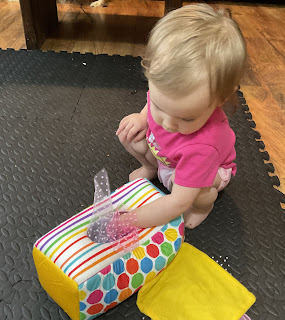
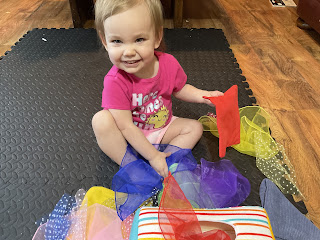
The true brilliance of this item lies in the tactile diversity of its contents. The box is populated with tissues of varying dimensions and textures: six sheer panels, six dotted tulle pieces, and three wonderfully "crinkly" fabric squares. The box itself features a weighted bean-bag base for stability, yet because it’s soft-sided, I have zero concerns about my daughter falling onto it or injuring herself during a spirited play session. Unlike a standard tissue box, which is a "one-and-done" exercise in destruction, this set is designed for endless repetition. Maintenance is equally effortless; the box is machine washable, and the tissues can be easily spot-treated to keep them looking pristine.
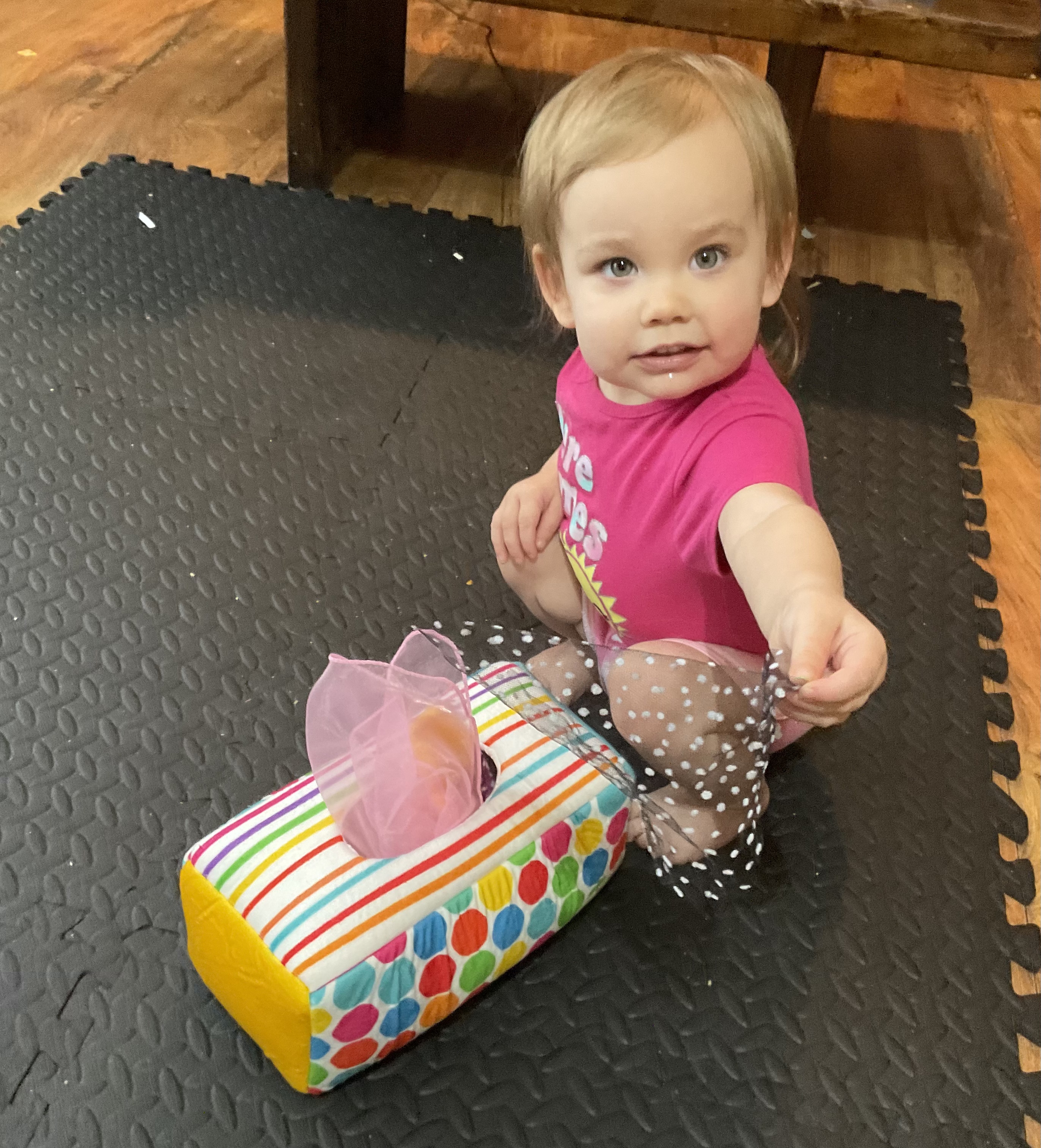

Beyond the obvious tactile benefits, we’ve found this to be a surprisingly versatile educational tool. We utilize it for color identification, counting drills, and exploring the concepts of scale and transparency. It’s also a magnificent "distraction device" for those moments when I need a brief reprieve to manage household tasks. Interestingly, this has become a collaborative toy; both of my girls enjoy playing with it together. My solitary mandate is "do not lose the tissues," which they’ve managed quite well—often repurposing the vibrant squares as picnic blankets for their figurines or, quite frequently, as avant-garde "silly hats."


I would unreservedly recommend this Sensory Tissue Box as a staple for the toddler years. It successfully redirects a destructive impulse into a constructive, multi-sensory learning experience. I am eager to expand our sensory collection—what specific items have you introduced to your little ones to encourage tactile exploration? Let me know in the comments below, and don’t forget to browse our other curriculum and resource reviews!

Comments

Post a Comment

Popular posts from this blog

Review: All About Reading Level 4

We have officially reached the summit of  All About Reading Level 4 , and I am currently accepting trophies, high-fives, and perhaps a very large latte. If you had told me a few years ago that we’d be tackling "anomalous phonetic structures" and "loanwords" without a total household meltdown, I would have assumed you were hallucinating. Yet, here we are, and I am officially a fan-girl for All About Learning Press. This final level is essentially the "Black Belt" of literacy instruction, diving into the deep end of the linguistic pool with a level of clarity that is frankly miraculous. The curriculum tackles those treacherous "borrowed" words that usually make the English language look like it was put together in a blender. As a dyslexic educator teaching a fellow dyslexic, I’ll be entirely transparent: I encountered phonetic principles in these four levels that were completely absent from my own public school experience. I was basically learning ...

Review: Djeco Pompom Pictures - All Aboard

Djeco Pompom  is a super cute and easy art craft for toddlers. They just put the pompoms on the corresponding dots. I like that it comes with all the pompoms you need. However, the glue stick they give you doesn’t make the pompoms sticks to the board. I tried regular glue and that didn’t work either so I ended up having to use a hot glue gun. So, I suggest having hot glue if you get this. There are small circles on the boards to let you know what color pompom goes where so it’s pretty self-explanatory. The kit does come with a small manual that it done with pictures so even your little one can look at the manual and understand which pompoms go on which board. 

Review: A to Z Board Book

In our household, literature is the cornerstone of early education, so we began our daily reading rituals when our daughters were mere infants. While our shelves are currently burgeoning with an eclectic array of alphabet primers, the  A to Z Board Book  has secured a particularly prestigious position in our rotation. As the name suggests, this is a board book—a vital feature for anyone navigating the "destructive" phase of toddlerhood. My youngest has a penchant for paper shredding that would rival a high-end office machine, so the sturdy construction of a board book is a non-negotiable necessity. However, because this is a "lift-the-flap" volume, I maintain a strict "supervised access only" policy to ensure the flaps remain attached to their respective pages. We have integrated this book into our daily school routine, as it offers a multifaceted sensory experience. My daughter is currently enchanted by the interactive elements, relishing the opportunity ...