
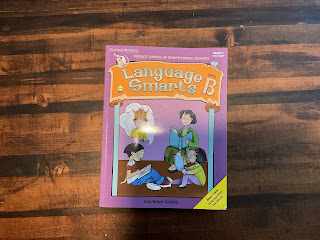
In our ongoing quest for the ultimate Language Arts framework, I decided to evaluate Language Smarts Level B to see how it measured up against our beloved All About Reading and All About Spelling duo. While the prospect of an all-in-one "Language Arts" volume is certainly appealing for its organizational simplicity, my experience with this particular workbook was—to put it delicately—somewhat tumultuous. A curious starting point: I was unable to locate a "Level A," which leads me to believe the series assumes a baseline of literacy that might be quite daunting for a true beginner. With word scrambles appearing early on, a child who hasn't yet mastered foundational spelling may find themselves more frustrated than fascinated.
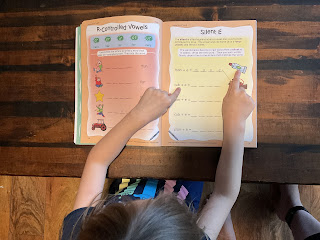
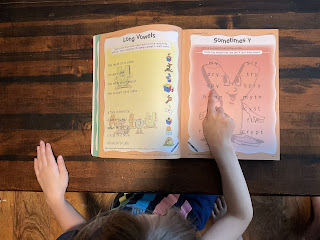

The pedagogical sequence of Language Smarts is, in a word, aggressive. It initiates instruction with short vowel sounds, but with a baffling lack of phonetic purity. For instance, the introductory vowel pages are saturated with "Y" endings; trying to explain to a fledgling reader that the "Y" in sky mimics a long "I" while the "Y" in gym acts as a short "I" is a recipe for linguistic vertigo. The transition into long vowels and double-vowel teams happens with dizzying speed. I found the volume of practice for these critical milestones to be remarkably insufficient, suggesting that one would need to supplement heavily with external workbooks just to achieve basic mastery.

The curriculum then meanders through consonants and "word patterns"—a concept whose utility remains, quite frankly, a mystery to me. If any of you have a more sophisticated insight into why we are categorizing word patterns in this specific manner, please do enlighten me in the comments. We also encountered a section on silent consonants, which proved to be a tactical challenge for us; as true Texans, we tend to "drop" our consonants with a certain regional flair, making it difficult to identify letters we rarely pronounce! On a more positive note, the inclusion of "a" vs. "an" usage is a vital addition, as it is a grammatical nuance that seems to elude a staggering number of adults on the internet.

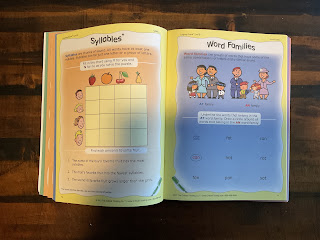
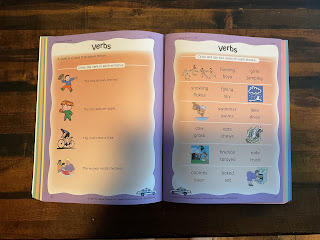
One of the more ambitious features is the "Editor in Chief" section, which tasks the student with identifying errors within a passage. While I appreciate the intent, I found this to be a bit "too much, too soon" for a child still grappling with the mechanics of decoding. Furthermore, essential concepts like syllables and rhyming appear quite late in the progression, which felt developmentally inverted. While the book technically covers the gamut of grammar—nouns, verbs, contractions, and subject-predicate relationships—the "touch and go" nature of the lessons left me feeling that none of these concepts were given the intellectual breathing room they deserve.

Ultimately, Language Smarts feels like a curriculum in a hurry. It occasionally veers into territory like sequencing and order of events, which I categorize more as critical thinking than traditional Language Arts. While the coverage of punctuation and capitalization is certainly welcome, the rapid-fire pace makes it difficult for a young scholar to attain true mastery. I remain a staunch advocate for the All About Learning philosophy; while they separate grammar into its own sphere, their depth of explanation and wealth of practice are vastly superior for long-term retention. Have you attempted the "all-in-one" workbook route, or do you prefer the specialized approach? Let’s discuss in the comments below!

Comments
Post a Comment