
Upon realizing that our primary history curriculum was somewhat lean in the realms of civic engagement and societal structures, I embarked on a quest for a supplemental resource to round out our first-grade experience. My search led me to 180 Days of Social Studies. Having found the kindergarten iteration to be a sturdy foundation, I decided to maintain our momentum with the first-grade volume. While I still harbor a sophisticated longing for a more vibrant, full-color interior to entice the youthful eye, the intellectual merit of the content successfully compensates for the monochromatic aesthetic. It is a robust introduction to the American experience, though a brief caveat is necessary: this curriculum is decidedly "US-centric," so those homeschooling abroad might find it less pertinent to their specific regional goals.
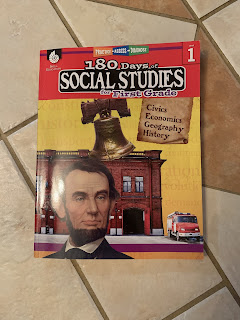
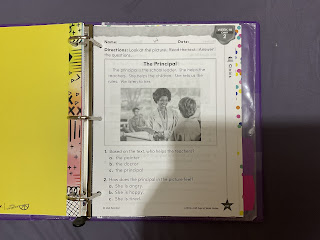
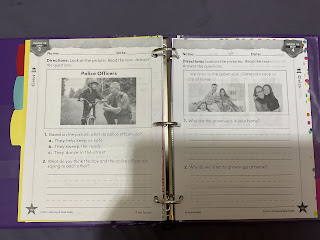
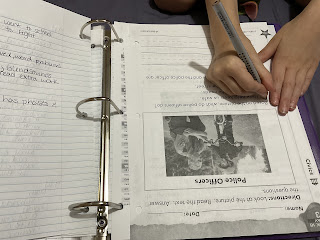


The architectural brilliance of this program lies in its "page-a-day" philosophy. For those adhering to a traditional 36-week academic calendar, the pacing is mathematically perfect. However, given our more rigorous 47-week schedule, we distribute the lessons with a touch more leisure. The beauty of this approach is that the workload is never burdensome. Each page provides a concise focused exercise, allowing us the intellectual space to deconstruct the content in detail without inducing "workbook fatigue." The curriculum follows a rhythmic five-day cycle, rotating through the pillars of civics, economics, geography, and history, which keeps the subject matter fresh and engaging.

From a mechanical standpoint, the book utilizes a variety of interactive formats: multiple-choice inquiries, matching exercises, and the occasional cut-and-paste activity. I have encountered one minor logistical "hiccup" with the latter; occasionally, the page intended for excision contains essential work on its reverse side. To preserve the structural integrity of the volume—and my own sanity—I often pivot these assignments into "drawing a line" exercises rather than reaching for the shears. It is a simple modification that keeps our lesson flow uninterrupted.

I must observe that for an academically accelerated student, many of the concepts in the first-grade volume are presented with extreme simplicity. My daughter navigated the primary concepts with such ease that the work became a celebratory confirmation of her existing knowledge. However, the true magic of this resource is the springboard it provides. For instance, when she expressed a profound fascination with the American flag, we utilized the lesson as a gateway to explore the historical evolution of the Stars and Stripes throughout the centuries. This is the quintessence of the homeschooling lifestyle: the ability to transform a single worksheet into a deep-dive exploration.

While Story of the World remains our champion for historical narratives, 180 Days of Social Studies serves as a vital anchor for understanding the mechanics of our modern world. It is an excellent, low-pressure way to ensure that "citizenship" is taught with the same priority as "computation." It has earned its place in our morning basket for its consistency and ease of use. I am curious to hear from my fellow educators: how do you balance the weight of ancient history with the practicalities of modern social studies? Let us know your preferred resources in the comments below!

Comments
Post a Comment