
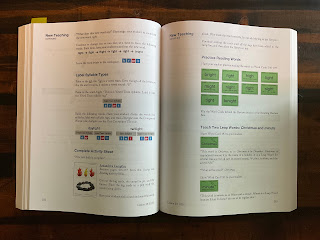
We are officially approaching the penultimate stage of our literacy journey: All About Reading Level 3. This curriculum has been nothing short of transformative, offering a meticulously organized structure that has empowered me, as a dyslexic parent, to effectively facilitate my daughter’s reading development entirely on my own. If you’ve followed our previous reviews, you know that I treat curriculum organization like a high-stakes competitive sport. From spiral-binding the teacher’s manual at Staples to laminating the game pieces and sequestering them in labeled zip-lock bags, I’ve turned "prep time" into a well-oiled machine.
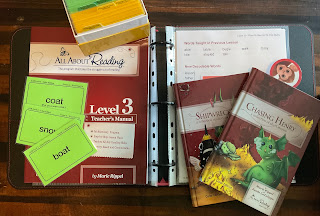

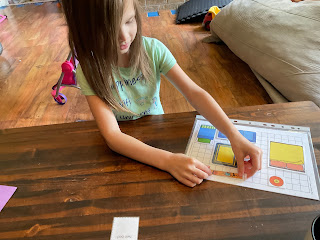
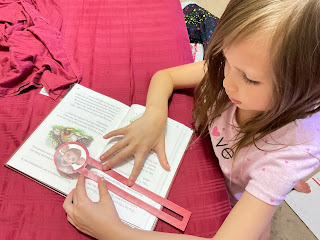

The student workbook is where the real magic—and the organization—continues. I’ve found that tearing out the pages and placing them in sheet protectors is a total game-changer; it not only keeps the materials pristine for my younger child to use later but also allows my daughter to repeat lessons if we hit a snag. This level includes two delightful readers packed with stories that she actually looks forward to. In fact, she’s become so enthusiastic that I often find her "sneaking a peek" at the title of the next story before she’s even mastered the new phonetic concept required to read it. That kind of anticipation is a win in any homeschooler’s book!

One of the highlights of Level 3 is the sheer abundance of reinforcement materials. Between the interactive games, the fluency sheets, and the warm-up drills, there is plenty of opportunity for the student to achieve mastery without feeling bored. While the program offers physical letter tiles, I opted for the tablet app to ensure no "accidental disappearances" occurred during our lessons. To keep things spicy, I often turn the games into a scavenger hunt by hiding the pieces around the living room. Pro-tip: Keep a list of where you hid them, or you’ll be finding phonogram cards behind the sofa for the next six months!

This level dives deep into advanced vowel teams, complex syllable division, and those tricky consonant blends that can trip up even the most confident readers. As a parent who struggled in the public school system, I often find myself thinking, "If I had been taught this way, my childhood would have been much easier." It’s a bit of a "full circle" moment for me to provide her with the tools I wish I’d had. The flexibility of this program is its greatest asset; we use it for second grade, but because it’s mastery-based, we move at exactly the pace she needs—full speed ahead or a cautious crawl, depending on the day.


Ultimately, Level 3 is a "must-have" for any family looking to build a rock-solid foundation in literacy. It’s the perfect blend of serious phonics and whimsical fun, proving that learning to read doesn't have to be a chore. There is truly no better feeling than seeing her pride when she conquers a difficult concept. I’m curious—what curriculum are you currently using to bridge the gap between "beginner" and "independent" reader? Have you experienced the All About Reading difference yet? Let’s swap stories in the comments below!
Comments
Post a Comment