
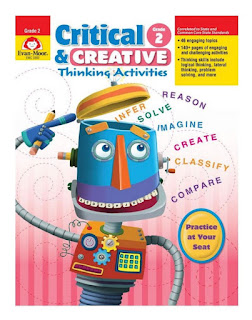
I have maintained a dedicated critical thinking course in our homeschool repertoire, as I consider it a non-negotiable skill for any developing mind. Critical and Creative 2 has remained a staple in our household primarily due to my daughter’s infectious enthusiasm for the material. This workbook is a vibrant tapestry of interactive tasks, including coloring, drawing, multiple-choice inquiries, and the occasionally treacherous word scrambles. Beyond the core analytical focus, the curriculum artfully weaves in fundamental math and literacy skills across six thematic domains: Animals, Places, Time to Eat, Human Body, My World, and Throughout the Year. Each sub-section is composed of a concise, three-page instructional arc, making it exceptionally approachable for younger scholars.


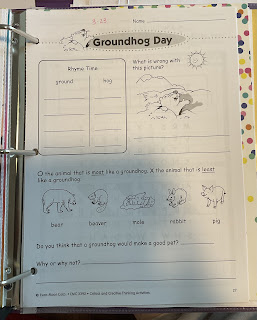
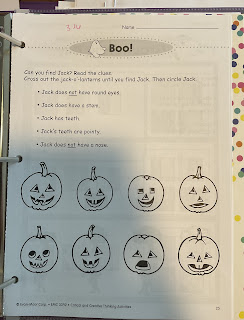

The pedagogical content focuses on familiar territory—topics such as Groundhog Day, dental hygiene, and household architecture—which ensures the student feels confident in their baseline knowledge. Because my daughter is academically advanced and successfully navigating the rigors of Math-U-See, the mathematical components of this workbook pose very little challenge for her. She completes the assignments with remarkable celerity, often viewing the "work" as a rewarded break rather than a chore. The primary intellectual friction arises during the word scrambles and the pattern-recognition riddles, which provide just enough "mental weightlifting" to keep the experience productive.

Prospective users should be aware that this curriculum is notably writing-intensive. While one could theoretically facilitate the lessons orally or scribe for a reluctant student, I firmly believe that the second-grade level is an ideal juncture for fostering independent composition. The workbook frequently challenges the student to design multiple variations of the same object or animal, encouraging "divergent thinking" alongside their handwriting practice. For students who may struggle with orthography or reading, the "missing letter" exercises may provide a significant hurdle, but as I often say, a moderate challenge is the most fertile ground for genuine cognitive growth.

From a critical standpoint, I must offer a nuanced perspective: while this booklet is undeniably engaging, it may lack the depth required for highly accelerated learners. Much of the questioning feels somewhat superficial, soliciting responses that my daughter can provide with minimal intellectual exertion. If you are seeking a curriculum that truly "stretches" a gifted child’s analytical faculties, you might find this particular series a bit light. However, its value in fostering a positive relationship with academic work cannot be overstated. I was sufficiently satisfied with her enjoyment of the program to include the third-grade version in our next academic block.

We acquired this resource via our 2nd Grade Timberdoodle kit, and it remains a highlight of her school day. It serves as an excellent "warm-up" or "cool-down" activity that ensures her brain is engaged without being overwhelmed. I am curious to learn about your own instructional strategies—do you maintain a separate time slot for critical thinking, or do you find it more effective to integrate these skills into your core subjects? Share your experiences in the comments below!

Comments
Post a Comment