
After navigating the labyrinth of mathematical curricula for several years, I can definitively assert that Math-U-See has been an extraordinary asset to our homeschool. The instructor’s manual is written with crystalline clarity, supplemented by a DVD for those moments when a visual demonstration is paramount. While many families find watching the videos with their children to be a vital component of the day, I find myself in a unique position; as a former chemistry major who conquered Calculus III, I generally have the conceptual "heavy lifting" under control. However, having a professional backup for those rare moments of pedagogical frustration is a luxury I truly appreciate.
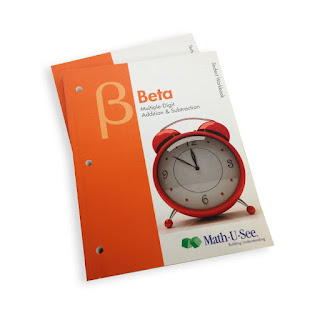
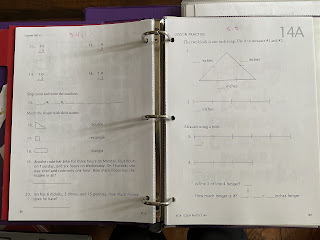
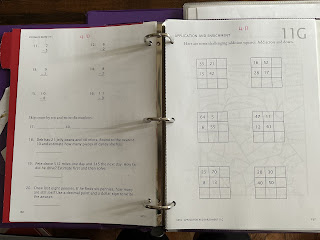
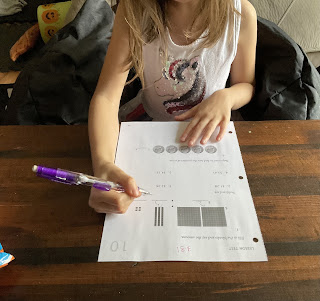

The curriculum is mastery-based, which aligns perfectly with my educational philosophy, and I am particularly enamored with the fact that it eschews "Common Core" (or "new math") entirely. Living in Texas, where such standards are effectively outlawed, I find the traditional "old math" approach to be far more efficient. Why take the scenic, confusing route when the direct path leads to the same destination without the unnecessary mental gymnastics? To ensure absolute proficiency, we utilize every single page from A through G, resisting the urge to skip ahead. This systematic review ensures that new concepts are layered onto a rock-solid foundation of previous knowledge.

One of the more sophisticated features of the student booklet is the grade log. While the Republic of Texas does not mandate formal grade records, I utilize this page as a diagnostic dashboard to identify at a glance which concepts might require additional reinforcement. The workbook also cleverly avoids monotony by varying the assignment styles; the "G" pages frequently incorporate "color-by-number" activities that reveal a hidden picture upon the correct solution of the problems. In the Beta level, the curriculum begins with a brief retrospective of Alpha before diving into more complex territory, such as the nuances of "greater than" and "less than" symbols that become more prominent in lesson three.

Admittedly, I do take a few "editorial liberties" with the material. For instance, while Beta introduces rounding to the nearest ten, I vehemently disagree with using estimation as a primary method for addition. In our household, we solve the equations with precision first, relegated rounding to a separate, supplemental exercise. The core focus of this level is multi-digit addition and subtraction—including the occasionally controversial "regrouping"—but it also branches out into measurement, perimeter, and reading gauges. While you will need to provide your own ruler, the provided block set remains an indispensable tactile tool that eventually gives way to effortless mental math facts.

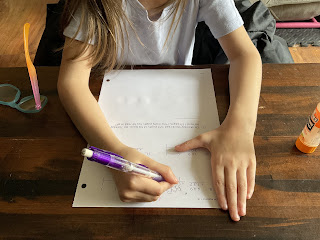
To combat the occasional "boredom monster" that haunts the subject of mathematics, I have developed a few strategic "mom-hacks." Since my daughter occasionally finds the workbook format uninspiring, I’ll transcribe the problems onto a whiteboard for a change of pace or we will complete the drills orally. I also introduce my own "mathematical shortcuts" and trends that I’ve noticed over the years—tricks that weren't in my own textbooks but make the process far more intuitive. Despite the occasional bout of monotony, the results are undeniable: her progress is far superior to what we experienced with Mathematical Reasoning. We secured our Beta level through our 2nd Grade Timberdoodle kit, and I haven't looked back since. What does math look like in your neck of the woods?

Comments
Post a Comment