
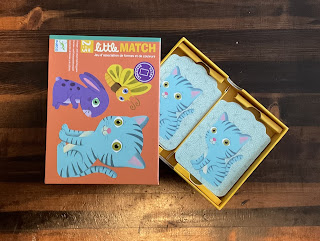
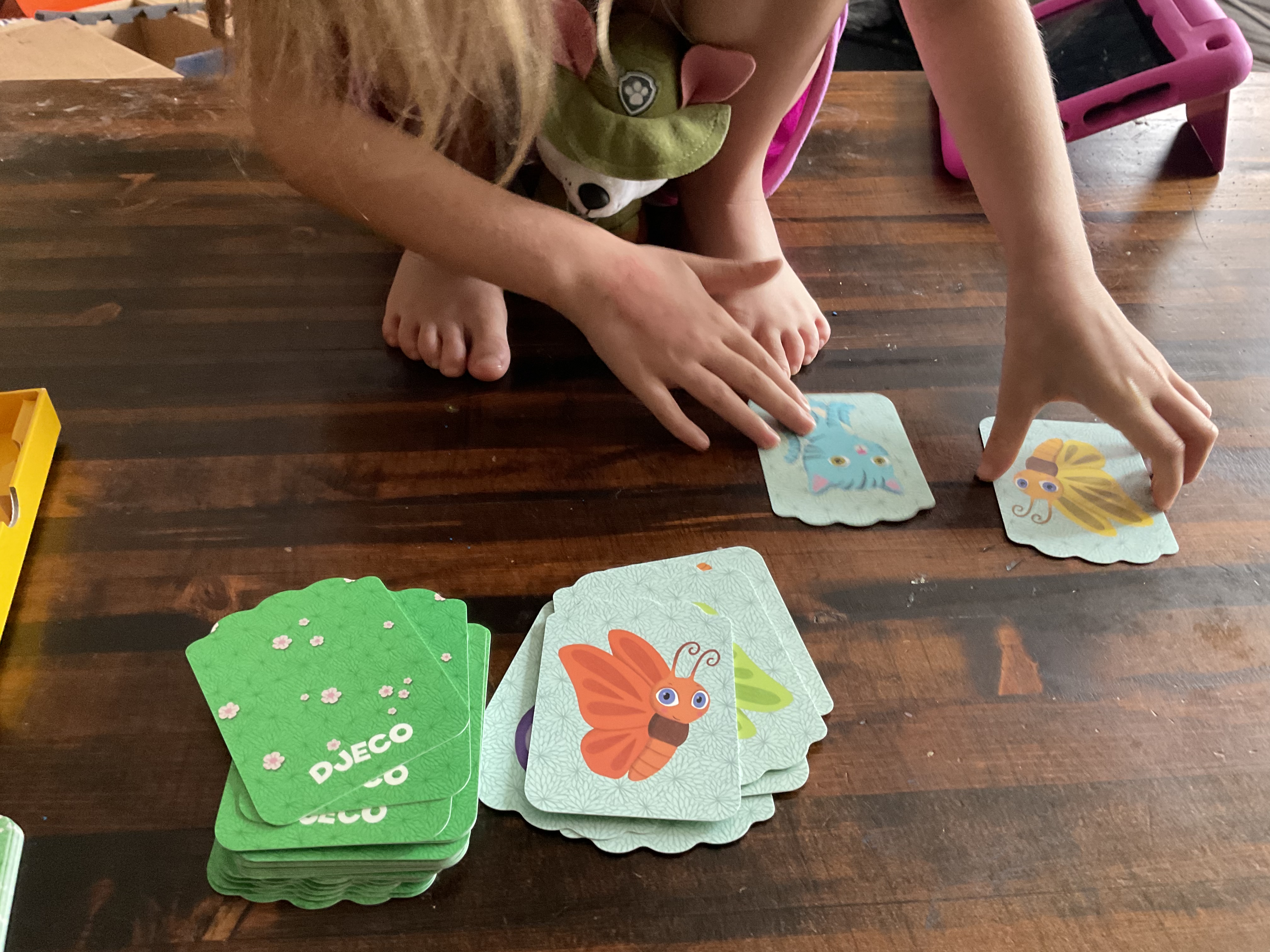
In our ongoing exploration of the Djeco catalog, we’ve recently pivoted from their exquisite art kits to sample one of their foundational tabletop offerings: Little Match. Designed for the budding academic aged two through five, this card game accommodates up to four players and serves as a vibrant introduction to the mechanics of categorization. The deck comprises forty cards featuring a charming quartet of animals—a cat, a bunny, an owl, and a butterfly—each rendered in a sophisticated palette of blue, red, yellow, purple, and green. While it possesses the rhythmic DNA of Go Fish, the gameplay is far more dynamic, functioning as a simplified, tactile precursor to strategic matching games.
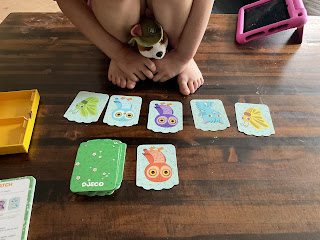
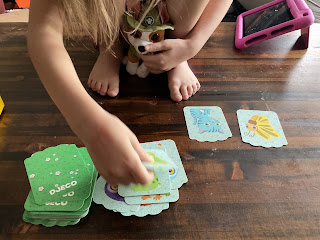

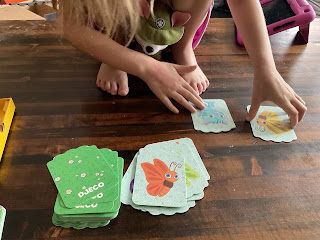

The procedural execution is delightfully straightforward: after a thorough shuffle, each participant is dealt a hand of four cards, with the remainder forming a central draw pile. In a nod to traditional "youngest first" etiquette, the starting player reveals a card from the stack; subsequent players must then match either the species or the hue to discard from their own hand. If a player finds themselves without a compatible match, they must draw from the central pile, effectively expanding their hand. The ultimate objective is a classic sprint to zero cards, making for a fast-paced and exhilarating session for the preschool demographic.

As a seasoned homeschooling parent, I’ve developed a few tactical modifications to maximize the utility of this deck for a multi-age household. For my youngest, who is approaching the two-year milestone, the formal rules proved a bit elusive; however, I’ve found that simply laying the cards face-up in front of her allows her to practice the fine motor skill of placement without the frustration of hidden information. Conversely, for my six-year-old—who is well-versed in complex systems—we escalate the difficulty by dealing an initial hand of seven cards. We’ve even experimented with a "strict logic" variant where a card can only be played if it matches either the color or the animal, but never both simultaneously.

For those in the earliest stages of cognitive development, Little Match can also be repurposed as a stationary matching activity. By arranging half the deck face-up on the floor, you can invite your toddler to pair the illustrations, providing a low-pressure environment to reinforce color recognition and animal identification. The physical quality of the cards is quintessential Djeco: compact, durable, and featuring decorative flourishes that make them a pleasure to handle. It is a rare resource that successfully occupies the intersection of play and early childhood development without feeling overtly "academic."

I would highly recommend Little Match as a staple for any "toddler busy bag" or morning basket. It is a superlative tool for honing visual discrimination and turn-taking skills in a format that feels entirely organic. While we are currently using it to solidify our youngest’s grasp of colors, it remains a surprisingly versatile tool for our oldest’s logic drills. I am eager to hear from my fellow educators: do you have a preferred card game for the two-to-five-year-old set that bridges the gap between colors and more advanced concepts like letters or numbers? Let’s exchange ideas in the comments below!
Comments
Post a Comment