
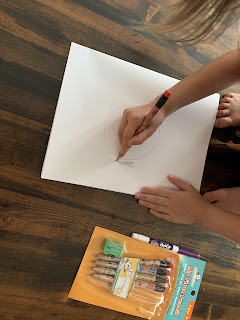
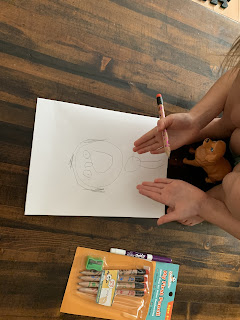
In our ongoing quest for the perfect penmanship tools, we recently auditioned Channie’s My First Pencils alongside their My First Letters workbook. The pencils are a masterclass in ergonomic design for the developing hand; you receive a set of five, each significantly more substantial than a standard pencil. My daughter immediately noted their superior comfort, finding them far less "awkward" than traditional writing implements—a significant victory for stamina during long practice sessions. They feature a charming aesthetic design that she deemed "fancy," and they come equipped with their own sharpener. While I would have preferred a sharpener with an integrated receptacle for shavings—and perhaps a triangular barrel to prevent the inevitable "roll-off-the-desk" syndrome—the fact that they arrive pre-sharpened is a logistical delight for any busy homeschooling parent.
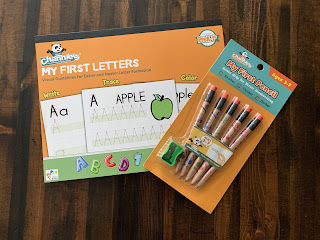
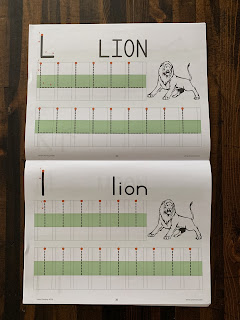
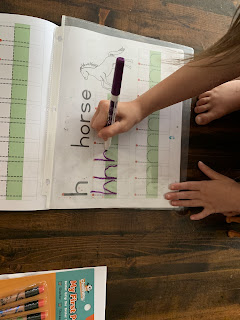

The My First Letters workbook follows a rhythmic structure: the student traces the uppercase letter sixteen times on the front of the page, followed by the lowercase version on the reverse. The subsequent page challenges them to write eight of each version independently. While the conclusion of the book offers seventeen tracing repetitions for numbers, it curiously lacks a section for independent number practice—a minor pedagogical oversight that I feel could have been easily remedied with an additional page.

One highlight is the inclusion of a substantial illustration for coloring that corresponds to each letter—such as a crisp apple for the letter "A." I find this much more precise than our previous curriculum, which occasionally utilized ambiguous imagery (labeling a "hat" as a "cap" for the letter "C" can be a bit treacherous for a literal-minded student!). However, I do wish the lowercase pages featured a different secondary image to broaden her vocabulary. My primary critique of the Channie’s system is the sheer scale of the practice grid. While the oversized format is intended to assist nascent writers, I personally prefer a size that more closely mimics the transition to standard notebook paper. Our current curriculum utilizes a more "realistic" scale, which I find more effective for long-term skill transfer.

Ultimately, I would definitively recommend the My First Pencils for any household; they are comfortable, decorative, and perfectly calibrated for small hands. My First Letters serves as a solid accompaniment, particularly for those just beginning their journey into literacy who benefit from a larger canvas. I’m curious to see how you all handle the transition to "regular" paper—do you prefer the oversized practice lines, or do you dive straight into standard margins? Let us know in the comments!


Thank you for sharing your review. It sounds like your daughter did really well with the pencils and handwriting practice!
ReplyDelete